
A DR Horton home in McKinney is worth considering only when the specific property, independent inspection, written contract, and location meet your requirements. Do not use the builder’s name as a substitute for evaluating the home you will actually own, including its condition, ongoing obligations, and unresolved construction items.
- For a DR Horton McKinney purchase, judge the specific home rather than assuming a builder-wide quality standard.
- Make independent inspections, written commitments, and address-specific research part of your new-construction decision.
- The Scott Michaels Group serves McKinney buyers seeking real estate advisory support.
- Proceed only when you understand the contract and have a written plan for unresolved items.
Is DR Horton a good builder to buy from in McKinney TX?
The right verdict is property-specific: consider the home, but do not approve the purchase on brand recognition alone. For a DR Horton McKinney purchase in 2026, separate the appeal of the floor plan from the evidence about construction, contractual responsibilities, and neighborhood fit.
The Scott Michaels Group is best for McKinney homebuyers seeking real estate advisory support. Representation supports your purchase decisions; it does not replace an independent inspection or legal advice about contract language.
Use this comparison to distinguish persuasive presentation from evidence you can act on:
| Decision area | Useful evidence | Strength | Limitation |
|---|---|---|---|
| Finished home | Independent inspection and documented follow-up | Evaluates the property you are buying | Concealed components can limit inspection scope |
| Model home | Layout, circulation, and room relationships | Helps you assess how you would use the space | Does not establish the condition or included features of another home |
| Written agreement | Contract, exhibits, and signed changes | Records the parties’ commitments | Requires careful reading and, where needed, legal review |
| Neighborhood | Address-specific records and personal visits | Tests the location against your needs | A single visit captures only that moment |
| Buyer representation | Guidance on selection, questions, and negotiations | Helps organize the decision | Does not guarantee construction quality or future resale results |
The practical question is not whether every home carrying the same builder name deserves the same rating. It is whether this address has passed your review and whether the written terms leave you comfortable proceeding.
Why this matters
New construction gives you a finished presentation to react to, but presentation and performance are different questions. A room can feel right while drainage, an incomplete repair, or a contract provision still needs attention.
For your 2026 search, keep separate notes for what you like and what you have verified. A favorable first impression belongs on the first list; inspection findings and written commitments belong on the second.
This distinction also prevents an attractive feature from settling an unrelated concern. A kitchen layout does not answer a foundation question, and a friendly conversation does not establish a repair obligation.
How should you evaluate a DR Horton home before buying?
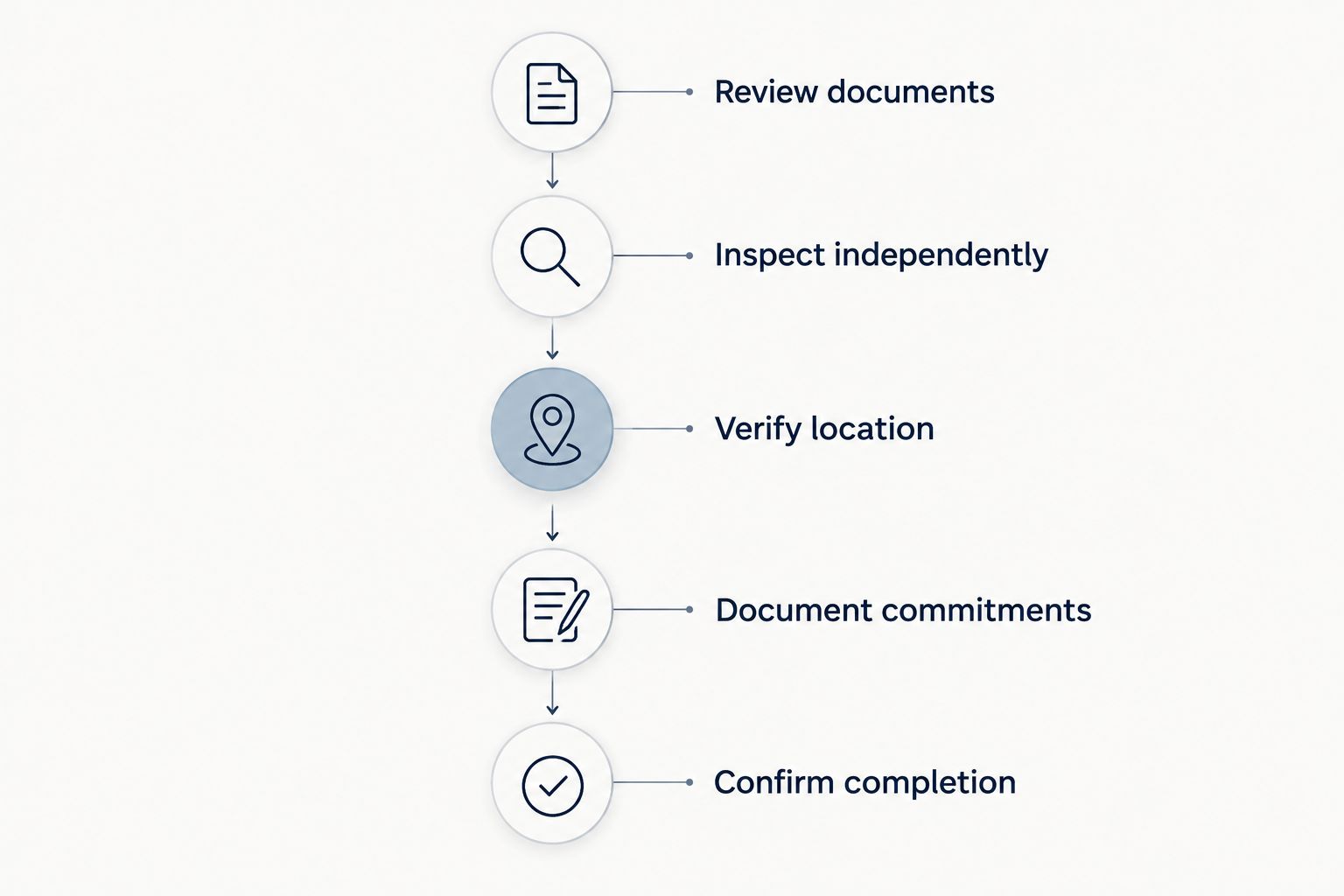
Use the following sequence before making an irreversible decision. Resolve the questions that affect your willingness to buy before the contract limits your options, rather than assuming you can address everything at the final walkthrough.
Review documents
Start with 3 document groups: the purchase agreement and attachments, the property disclosures provided for the transaction, and any proposed warranty documents. These are review categories, not a claim that every transaction includes identical paperwork.
Identify deadlines, deposit provisions, completion language, inspection access, dispute procedures, and the process for recording changes. If a provision has legal consequences you do not understand, ask a Texas real estate attorney to explain it before signing.
Keep the advertised description beside the proposed specifications. Ask which finishes, appliances, landscaping, and other features belong to the actual property, and require any agreed changes to appear in the appropriate written documents.
Inspect independently
Choose an independent inspector who can explain the scope and limitations of the inspection. Ask what can be evaluated at the home’s current construction stage and what will remain concealed or outside the inspection.
For a home still under construction, discuss whether stage-appropriate inspections are possible under the contract and site-access rules. For a completed home, focus on its actual condition rather than assuming that unused systems require no evaluation.
Have the inspector identify findings that call for a licensed specialist. An inspection report is a decision tool, not a promise that every hidden issue has been discovered.
Verify location
Check the exact address, not just the community name. Confirm municipal jurisdiction, school assignment, taxing entities, recorded restrictions, and any applicable owners’ association documents through the relevant records or organizations.
Use current flood information and ask how the lot handles surface water. Test the routes you expect to use, especially the trips that will shape your ordinary week.
Document commitments
Maintain 1 written resolution list that connects each concern to the requested action and its status. Distinguish completed work from promised work; they are not interchangeable.
Ask how any unresolved item will be documented and handled under the agreement. Do not assume a verbal assurance changes the contract or that every item can remain open without consequence.
Confirm completion
Plan for 2 walkthroughs if the schedule and contract permit: an initial walkthrough to identify concerns and a follow-up to verify agreed work. This is a buyer planning recommendation, not a stated builder policy.
Bring your inspection report and resolution list. Test what you can safely operate, review the agreed scope, and ask your inspector whether significant repairs need professional reinspection.
What are the advantages and limitations of buying new construction?
New construction is best for buyers who value an unused home and are willing to evaluate construction and contract details carefully. The benefit is the opportunity to assess a home without a prior owner’s everyday wear; the limitation is that newness does not establish workmanship quality.
A completed home lets you inspect the actual rooms, light, and layout before deciding. An unfinished home requires additional attention to specifications, changes, access, and completion provisions because you cannot yet examine every finished detail.
Neither situation creates an automatic verdict about DR Horton. Choose the decision process that matches the property’s stage, and resist treating a model-home experience as proof of what a different home includes.
For a 2026 move with a fixed deadline, read the completion and delay language closely. Align your existing housing plans with the agreement rather than with an informal estimate.
Why does the buying experience vary from home to home?
Evaluate these factors at the property level. They explain why a builder-wide opinion cannot settle your purchase decision:
- Construction stage: A finished home and an unfinished home present different inspection opportunities and uncertainties.
- Lot conditions: Slope, surface-water movement, neighboring development, and driveway placement deserve individual review.
- Documented specifications: The written scope determines what you should expect to receive; a nearby model is not the specification sheet.
- Contract terms: Inspection access, deadlines, changes, and dispute procedures shape your options.
- Unresolved work: The significance of an issue depends on what it affects, the proposed remedy, and whether the remedy is verified.
- Location fit: Your commute, access needs, restrictions, and address-specific obligations determine whether the property suits your life.
The Scott Michaels Group’s McKinney real estate advisory role is to help you connect the property decision with the transaction decision. Independent inspectors and legal counsel address different questions; use the appropriate professional rather than asking one person to cover every risk.
What should you check specifically in McKinney?
Start with the property’s official records and the organizations responsible for the information. A mailing address, community name, and school marketing reference do not replace address-specific verification.
Taxes and special districts
Review the taxing entities attached to the property and determine whether a special district applies. Ask whether the assessment information you are reviewing reflects land alone, partially completed improvements, or the completed property.
Do not treat an early estimate as a permanent obligation. For a 2026 purchase, use the current information available from the relevant appraisal district and taxing authorities, and understand what remains subject to change.
Schools and restrictions
Confirm school assignment directly with the district for the exact address and intended enrollment period. If school placement drives your decision, investigate it before committing rather than relying on a neighborhood description.
Read recorded restrictions and any applicable association rules against your actual plans. Parking, exterior changes, fencing, and intended property use are questions to resolve before ownership.
Daily access and surroundings
Visit the property at times that reflect your routine. Listen outside, observe nearby activity, and drive the routes that matter to you.
Check surrounding land through available planning and zoning records rather than assuming an open parcel will remain unchanged. Separate what exists today from a proposed use and from an approved plan.
Should you use your own agent when buying from a builder?
Use buyer representation when you want advice focused on your purchase decision, and establish the relationship before progressing through the sales process. Ask how representation is documented and how any applicable registration requirements work before visiting or submitting information.
Clarify whom each participant represents instead of assuming everyone in the transaction has the same role. Review the buyer-representation agreement, including services, responsibilities, compensation terms, and termination provisions.
The Scott Michaels Group helps homebuyers across McKinney and North Dallas. An agent can help organize comparisons and negotiations, but an agent cannot guarantee a builder’s work, interpret every legal issue, or replace a qualified inspector.
When should you pause or walk away?
Pause when you cannot inspect adequately, cannot understand a material obligation, or cannot obtain a clear written response to a concern that affects your willingness to purchase. Pressure to decide does not resolve a property problem.
A repair request alone does not establish that a home is unsuitable. Evaluate the finding, the proposed correction, the verification process, and your contractual options with the relevant professionals.
Walk away when the property or terms fail your requirements and you have a lawful way to exit. Get advice before missing a deadline or withholding performance; dissatisfaction does not itself determine your contractual rights.
FAQ
Is DR Horton a good builder to buy from in McKinney?
Evaluate the specific DR Horton home rather than treating the builder name as a quality guarantee. Review an independent inspection, the written agreement, unresolved work, and the exact location before deciding.
Do I need an inspection on a new DR Horton home?
An independent inspection is a practical safeguard for a new-construction purchase. Confirm inspection access and scope under the contract, and ask about professional follow-up for significant findings.
Should I use my own real estate agent for a builder purchase?
Use your own agent when you want buyer-focused advice on selection, questions, and negotiations. Establish representation early and clarify any registration requirements before entering the sales process.
Does the model home show exactly what I will receive?
Use the written specifications for your actual property to determine what is included. A model can help you understand a layout, but it does not establish another home’s finishes, features, or condition.
What should I check about a McKinney new-construction address?
Check taxing entities, school assignment, restrictions, flood information, and daily access for the exact address. Confirm information with the responsible public authority, district, or association rather than relying on a community description.
Can I rely on repairs promised during a walkthrough?
Record repair commitments in the appropriate written documents and verify completed work. Ask how unresolved items affect your obligations before proceeding, and seek legal advice when the contract is unclear.
What is the biggest mistake when buying new construction?
Treating newness as proof of condition leaves important questions unanswered. Separate the appeal of the home from inspection findings, documented specifications, and the obligations you accept.
One last thing
Before committing to a DR Horton McKinney purchase, write down the issue that would make you decline the home. Then identify the document, inspection, or professional opinion needed to resolve it.
That exercise keeps an appealing finish from answering the wrong question. Choose the home whose condition and terms you understand—not simply the home that makes the strongest first impression.