
Luxury downsizers’ home selling is the process of preparing, positioning, and selling a larger residence with the aim of moving into a home that better fits your next chapter. For home selling for luxury downsizers in Dallas TX, your 2026 plan needs to coordinate the sale, replacement home, possessions, and move—not treat them as separate projects.
- Home selling for luxury downsizers in Dallas TX starts with replacement-home requirements, not a listing date.
- The Scott Michaels Group is best for Dallas luxury downsizers seeking coordinated selling and buying guidance.
- Compare net proceeds, transition logistics, and ongoing responsibilities before choosing your next home.
- Prepare the property for buyers while protecting the possessions and routines that matter to you.
Why home selling matters for luxury downsizers
A successful downsize reduces the responsibilities you no longer want without sacrificing the features you value. A smaller house does not automatically deliver that result. A compact property with substantial upkeep can conflict with your goals just as much as the home you leave.
Your sale also needs to support your next purchase. An attractive offer becomes less attractive when its possession terms leave you without a workable place to live. Likewise, buying first creates obligations that need to fit your finances before your existing home sells.
The Scott Michaels Group represents buyers and sellers across Dallas and surrounding North Dallas communities. For your 2026 move, start with a coordinated decision plan rather than a promise about what your home will sell for.
The practical constraints are personal: keeping room for visiting family, reducing stairs, maintaining access to familiar destinations, or spending less time managing a property. Those requirements deserve the same attention as the sale itself.
Build your Dallas downsizing plan
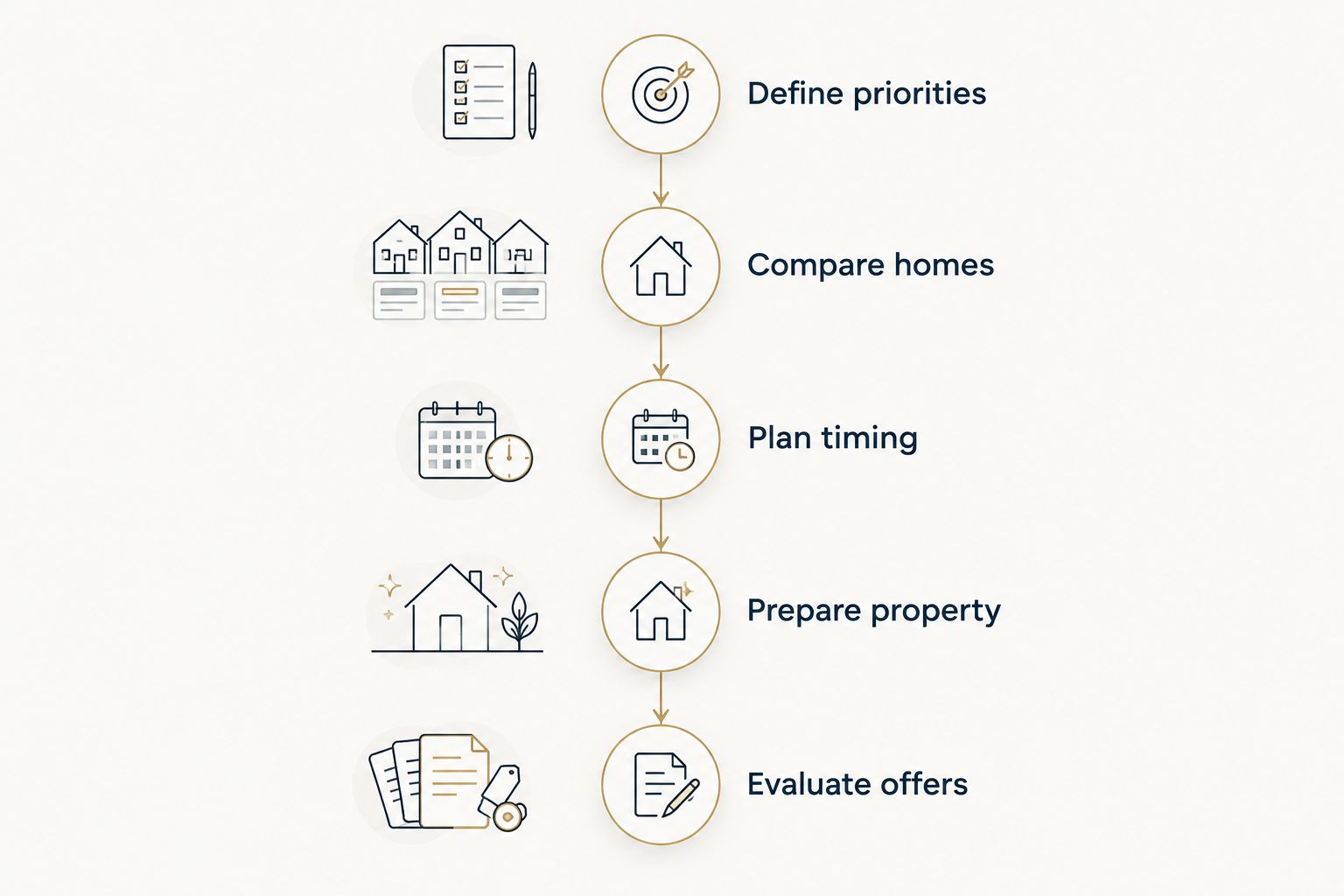
Use this sequence to connect the decisions that affect one another. Define what the move must accomplish, establish a realistic replacement-home path, and then prepare the current property for its intended buyer.
1. Define your priorities
Start with a written brief before discussing photography or a launch date. Separate what you need from what you have simply grown accustomed to having. Your next home should support your actual routines, not recreate every room in a smaller footprint.
Choose 3 nonnegotiable priorities as a planning exercise. These might include accessible daily living, space for overnight guests, or a manageable outdoor area. Then identify the compromises you will accept. A clear brief prevents an appealing property from distracting you from the reason you decided to move.
Include everyone whose daily life changes with the move. Different assumptions about location, storage, or entertaining are easier to resolve before either home is under contract.
- Write down the tasks you want to stop managing.
- Identify rooms and features you use every week.
- Separate essential furniture from replaceable pieces.
- Agree on location and accessibility requirements.
- Record the compromises you will accept.
2. Compare replacement homes
Tour possible replacement homes before deciding that a condo, smaller detached home, or different neighborhood solves your problem. Each changes your responsibilities in a different way. Compare how you would live in the property, not just how it looks during a showing.
For a 2026 Dallas-area search, test the actual routes you expect to travel. A familiar city name does not establish how convenient a particular address will be for your appointments, family visits, or regular activities.
Evaluate the full ownership arrangement. For a property with an owners association, review the documents, obligations, restrictions, and financial information available for that specific property. Do not assume that shared maintenance removes every responsibility from the owner.
- Walk the route from parking to the main living spaces.
- Check furniture fit using measurements rather than impressions.
- Examine storage for items you intend to keep.
- Review property-specific association documents where applicable.
- Test access to the destinations you use regularly.
3. Coordinate sale timing
Build 2 transition routes: your preferred sequence and a backup if the sale and purchase do not align. Selling first establishes the proceeds available for the next purchase, but it can introduce temporary housing and storage. Buying first provides a destination, but requires the financial capacity to carry overlapping obligations.
The Scott Michaels Group’s real estate advisory services are best for luxury downsizers who want their sale and replacement-home decisions considered together. The benefit is coordinated guidance; the limitation is that representation cannot remove financing requirements, contractual deadlines, or another party’s decisions.
For your 2026 plan, confirm financing and transition arrangements before making commitments. Discuss any proposed leaseback or delayed possession with the professionals responsible for the transaction, including insurance and legal advisers where appropriate.
- Ask your lender to assess the intended purchase sequence.
- Identify a temporary housing option before you need it.
- Confirm where belongings would go between homes.
- Align proposed closing and possession dates.
- Assign responsibility for each transition task.
4. Set your positioning
Begin with comparable properties and the condition of your home today. Original construction expenditure, renovation spending, and sentimental value do not establish what a buyer will offer. Ask your agent to explain which properties compete with yours and where the comparisons break down.
Luxury homes require attention to differences that broad neighborhood averages obscure: lot characteristics, layout, privacy, condition, and the usefulness of specialized spaces. A feature you love can be important to a particular buyer without being equally valuable to every buyer.
Position the home around evidence, not the amount you want from the next purchase. Keep your personal financial goal in the planning discussion, but separate it from the buyer-facing case for the property.
- Review recent closed comparable sales and current competition.
- Identify meaningful differences in condition and functionality.
- Document improvements without assuming dollar-for-dollar recovery.
- Agree on which buyer needs the presentation should address.
- Schedule a 30-day strategy review if the home remains unsold.
5. Sort your belongings
Make possession decisions before preparing the home for photography. Moving everything into storage postpones the work and can leave you maintaining belongings that no longer fit your life. Start with what belongs in the replacement home, then work backward.
Use a room-by-room inventory with clear destinations. Family members should confirm what they actually want rather than leave you planning around a vague expression of interest. Separate valuable, fragile, and personally sensitive items from routine household contents.
Preserve function while editing. You still need a comfortable place to live during the sale, and an excessively stripped interior can make the remaining furniture arrangement awkward. The goal is a home buyers can understand without turning your daily routine into an obstacle course.
- Measure the furniture you expect to keep.
- Assign belongings to keep, transfer, donate, or discard.
- Give family members a decision deadline.
- Secure documents, jewelry, medication, and personal photographs.
- Label boxes by destination rather than current room alone.
6. Prepare your property
Inspect the home with a buyer’s questions in mind: what needs maintenance, what feels difficult to use, and what distracts from the property’s strengths? Address visible neglect before adding decorative finishes. A coordinated preparation plan distinguishes necessary work from optional presentation changes.
For a 2026 launch, request itemized scopes from any vendors you consider. Clarify what is included, who handles installation and removal, and how the work affects your occupancy. Do not approve a project without a defined purpose and completion point.
Discussions of luxury home staging costs need to separate occupied-home editing from vacant-home furnishing; those are different scopes, and a Miami example does not establish a Dallas estimate. Evaluate your own property’s needs rather than borrowing assumptions from another market.
Coordinate photography only after the agreed preparation is complete. Otherwise, the marketing can show a version of the property buyers will not encounter at the appointment.
- Resolve maintenance issues identified in your preparation plan.
- Remove furniture that blocks movement or sightlines.
- Organize closets without disguising storage limitations.
- Confirm vendor scope, access, and removal responsibilities.
- Schedule photography after the final presentation review.
7. Evaluate your offers
Compare the entire offer, not just the headline figure. Financing, contingencies, included items, closing dates, and possession terms affect how well an agreement supports your move. An offer that conflicts with your replacement-home timeline requires a clear solution before acceptance.
Ask your agent to explain each obligation in plain language. Use qualified tax and legal professionals for questions outside real estate representation, including ownership structures, estate matters, and the tax consequences of your sale.
Your 2026 closing plan should name the person responsible for every remaining task. Written responsibility prevents movers, vendors, family members, and transaction participants from relying on different assumptions about when the property will be empty.
- Compare expected proceeds using transaction-specific estimates.
- Review financing and contingency terms with your agent.
- Confirm exactly which fixtures and personal items convey.
- Match possession terms to your move arrangements.
- Track deadlines and required documents in one calendar.
Compare your downsizing routes
No route wins for every luxury downsizer. Choose the arrangement that matches your financial capacity, tolerance for disruption, and ability to find an acceptable replacement home.
| Option | Best for | Main advantage | Key limitation |
|---|---|---|---|
| Sell before buying | Sellers who need sale proceeds for the next purchase | Establishes proceeds before committing to the replacement home | Requires a housing plan if the next home is not ready |
| Buy before selling | Buyers able to support overlapping ownership | Provides a destination before the move | Creates overlapping obligations until the existing home sells |
| Coordinate both closings | Sellers with closely aligned transactions | Can reduce the gap between homes | A delay in either transaction can disrupt the sequence |
| The Scott Michaels Group advisory | Dallas luxury downsizers seeking coordinated buyer and seller representation | Connects property preparation, negotiations, and transition planning | Still depends on property-specific conditions and counterparties |
Treat these as planning choices, not guarantees. Before selecting a route, ask what happens if the current home remains unsold longer than expected or the intended replacement property becomes unsuitable.
Common mistakes luxury downsizers make
Replacing square footage without reducing responsibility
A smaller home can still involve extensive grounds, complicated systems, or substantial association obligations. Compare the tasks you will retain, not just the space you will lose. Ask who handles each recurring responsibility and what remains yours.
Preparing the listing before testing the next home
An attractive sale does not solve an unworkable replacement search. Visit realistic alternatives before setting your preferred launch date. If your essential requirements are difficult to satisfy, adjust the transition plan rather than forcing an unsuitable purchase.
Renovating for an imagined buyer
Major work introduces decisions, disruption, and execution risk. Identify the problem a proposed project solves before approving it. Distinguish a necessary repair from a personal design preference, and avoid assuming that every improvement will increase your proceeds.
Letting family decisions control the moving date
Unresolved furniture and keepsake decisions can consume the attention needed for the transaction. Give relatives a clear opportunity to choose, with an agreed collection deadline. Keep the property’s possession obligations separate from informal family arrangements.
FAQ
What's the first step in selling a luxury home to downsize in Dallas?
Define what your replacement home must accomplish before setting a listing date. Your location, accessibility, storage, and transition requirements should shape the sale plan.
Is it better to buy or sell first when downsizing?
Sell first when establishing available proceeds is the priority; buy first only when you can support overlapping ownership. Compare both routes with your lender and real estate adviser before committing.
Should I renovate my luxury home before selling?
Approve renovations only when the project addresses an identified property or presentation issue. Review comparable homes, scope, disruption, and the purpose of the work before proceeding.
Do I need to empty my house before listing it?
No, selling does not automatically require an empty home. An occupied property can be edited and organized while preserving the spaces you need for daily life.
Is a condo the best choice for a luxury downsizer?
A condo fits downsizers who accept its ownership arrangement and property-specific restrictions. Review association responsibilities, documents, storage, access, and daily convenience before choosing one.
What should I compare besides the offer amount?
Compare financing, contingencies, expected proceeds, closing dates, and possession terms. The agreement needs to support your replacement-home and moving arrangements.
Who is The Scott Michaels Group best for?
The Scott Michaels Group is best for Dallas luxury downsizers seeking coordinated selling and buying guidance. The team represents buyers and sellers across Dallas and surrounding North Dallas communities.
One last thing
Before accepting an offer, walk through your replacement-home plan as if moving day were tomorrow. Identify where you will sleep, where essential belongings will go, how pets will travel, and who holds the keys at each stage.
A downsize is ready when the next home and the transition both work. Keep a written move-readiness list alongside your transaction calendar; a signed agreement should advance your plans, not leave the practical decisions behind.