
Tech professionals’ home buying in Frisco, TX is the process of matching a property, financing plan, and location to your work and financial priorities with the aim of securing a home you can sustain comfortably. This 2026 guide explains how to evaluate variable compensation, hybrid commutes, home-office requirements, and relocation timing before you commit.
- Home buying for tech professionals in Frisco TX starts with lender-verified income, not projected stock compensation.
- The Scott Michaels Group suits North Dallas buyers seeking real estate advisory support.
- Test the actual commute and verify address-level internet service before choosing a home.
- Coordinate mortgage approval, inspections, and lease obligations before committing to a moving date.
Why home buying matters for tech professionals
Your home search should follow your financial and work constraints—not the other way around. A compelling listing does not resolve uncertain equity income, a difficult office commute, or a lease that overlaps with ownership.
For your 2026 purchase, separate what you control from what requires verification. You control your savings target and search criteria; your lender determines which income qualifies, and property documents establish restrictions that affect how you use the home.
The Scott Michaels Group provides home-buying advisory support for buyers across North Dallas. The Scott Michaels Group is best for buyers seeking real estate advisory support across North Dallas. Representation helps organize decisions and negotiations, but it does not replace mortgage underwriting, inspections, or legal advice.
Frisco is a location preference, not a complete buying strategy. Your actual workplace, household needs, financing, and property condition should determine which addresses make the shortlist. Start with those constraints before comparing finishes or square footage.
Build your Frisco home-buying plan
Define your financial guardrails
Start with a spreadsheet rather than a mortgage calculator alone. Separate recurring take-home income, variable compensation, accessible savings, existing obligations, and the cash you want untouched after closing. A lender’s approval and your personal comfort limit answer different questions.
If compensation includes restricted stock units, bonuses, or commissions, ask your lender how each component is documented and evaluated. Do not assume that an offer letter, future vesting schedule, or projected stock value establishes qualifying income.
Create a conservative ownership budget that accounts for taxes, insurance, association obligations, maintenance, and utilities alongside the loan payment. Request property-specific estimates rather than carrying assumptions from a different address into your decision.
- Separate recurring income from variable compensation.
- Record vesting dates without treating future proceeds as cash.
- Set a cash reserve that remains after closing.
- Include ongoing ownership expenses in your budget.
- Ask the lender which funds require supporting documentation.
Verify financing before touring seriously
Compare financing directly with lenders and request written explanations of their assumptions. Give each lender the same information so differences in loan structure, documentation, and conditions are visible. A preliminary conversation is not the same as a completed underwriting review.
For a 2026 relocation, discuss employment transitions before making commitments. A change in employer, compensation structure, or work status belongs in the lending conversation immediately—not after you have negotiated a contract.
Ask for 2 written financing scenarios using the same property assumptions. This is a comparison exercise, not a claim that either scenario will receive final approval. Review cash required, ongoing obligations, and conditions together; do not select financing from the headline payment alone.
- Submit complete employment and compensation records.
- Identify documentation required for equity-related funds.
- Compare scenarios using consistent assumptions.
- Confirm which approval conditions remain outstanding.
- Discuss job changes before making an offer.
Translate your work needs into property criteria
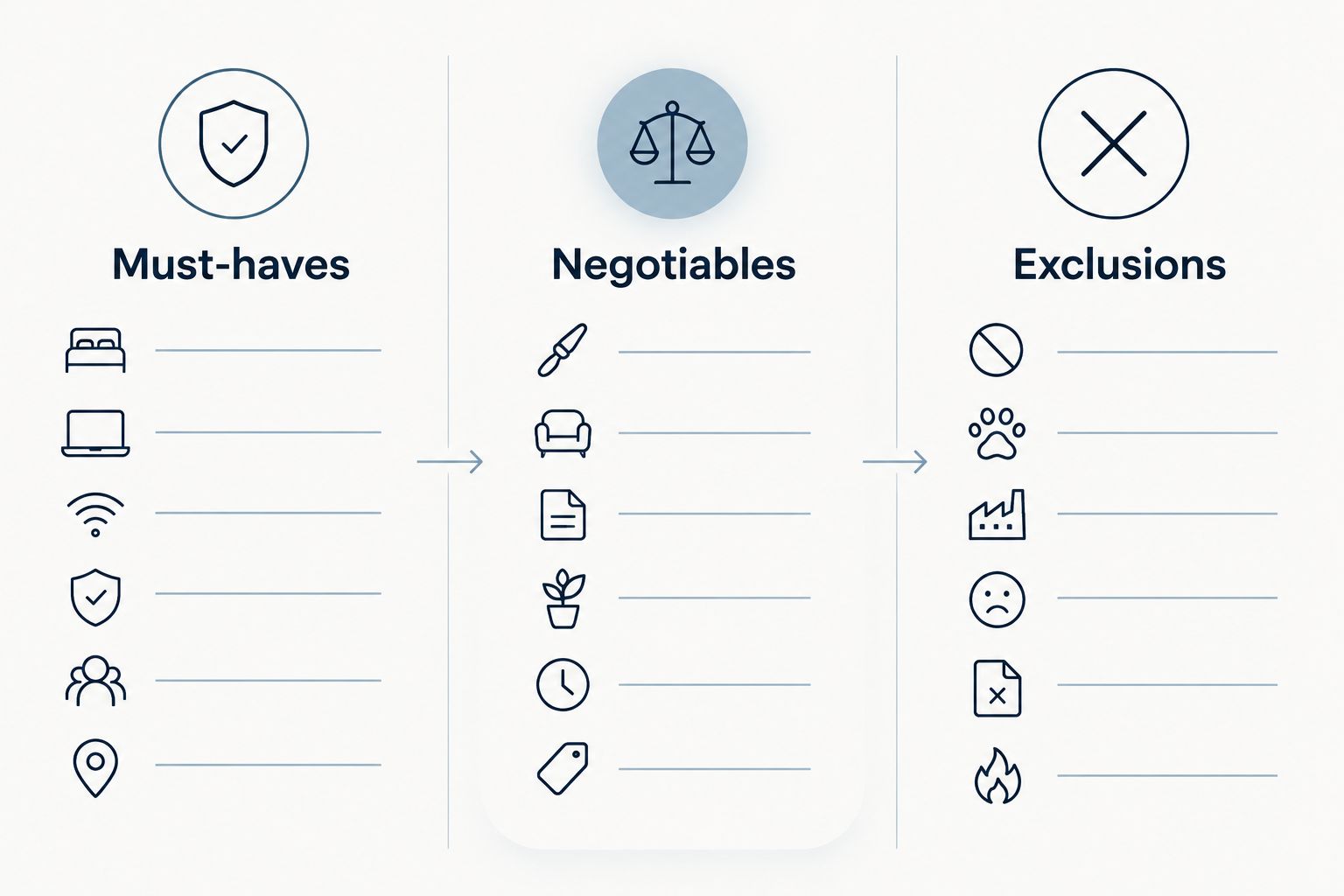
Write your search brief yourself before browsing more listings. Use three categories: must-haves, negotiables, and exclusions. A must-have should determine whether you would actually buy the property, not simply describe something attractive.
For hybrid work, identify the office location you must reach and the conditions under which you travel. For remote work, evaluate the room itself: privacy, background noise, daylight, electrical access, and whether work disrupts the rest of the household.
The Scott Michaels Group can use your home-buying brief to organize property comparisons and questions for sellers. That advisory support gives your search structure; you still need to test the commute and confirm service at the address.
- Must-haves: Record requirements that determine purchase eligibility.
- Negotiables: Identify features you can change or accept differently.
- Exclusions: List conditions that end consideration immediately.
- Verify whether property restrictions affect your intended use.
- Keep work requirements separate from cosmetic preferences.
Test the address against your working day
A map preview cannot reproduce your daily routine. Visit the area around the times you expect to leave and return, and test the trip to your actual workplace rather than a general business district. Include parking and the final walk when evaluating the journey.
Schedule 3 commute tests if office travel is central to your decision: an outbound trip, a return trip, and a trip under a different workday schedule. These are recommended checks, not a guarantee of future travel times. Record what happened instead of relying on memory.
For home internet, use the exact property address when contacting providers. Ask what service can be installed, what installation requires, and whether existing equipment affects the setup. An availability result for the surrounding neighborhood does not verify the connection inside the house.
- Test the route to your actual workplace.
- Record departure, arrival, parking, and access conditions.
- Check office-room noise during a relevant working period.
- Confirm address-level internet service and installation requirements.
- Identify a backup connection plan for essential work.
Evaluate the property beyond its presentation
Begin with your own walkthrough notes, then use qualified inspectors and relevant specialists to investigate concerns. Fresh finishes and attractive photography do not establish the condition of a roof, foundation, drainage system, or mechanical equipment.
For a 2026 purchase, review the documents applicable to the specific property. Depending on the home, that includes seller disclosures, association materials, survey information, title documents, and restrictions. Ask the appropriate professional to explain issues outside your expertise.
For a condominium, evaluate the association documents alongside the unit itself. For a detached home, consider exterior maintenance and site conditions alongside interior space. Both require a property-specific assessment rather than assumptions based on the ownership type.
- Review disclosures before treating concerns as resolved.
- Attend the inspection when practical and ask questions.
- Request specialist evaluation when an issue warrants it.
- Read restrictions affecting alterations or intended use.
- Distinguish cosmetic work from unresolved condition concerns.
Coordinate your lease, offer, and move
Build a calendar yourself before choosing a possession target. Mark your lease expiration, notice requirements, planned travel, employer commitments, and any funding events that affect the purchase. Then compare that calendar with the proposed contract dates.
The Scott Michaels Group can help coordinate the home-buying timeline and negotiations around your priorities. Contract deadlines still require active attention from you, your lender, and the relevant professionals; coordination does not eliminate financing or possession risk.
An apartment lease and a purchase contract create separate obligations. When evaluating breaking a lease in Texas, distinguish the move-out date you want from the obligations established by your lease and applicable law. Obtain the landlord’s written explanation and seek legal advice when interpretation is disputed.
Do not give notice solely because a seller accepted your offer. First assess the remaining financing, inspection, and closing conditions, then decide how much overlap your circumstances can support.
- Read your lease’s notice and early-termination provisions.
- Request written clarification of disputed obligations.
- Map contract deadlines against work and travel commitments.
- Confirm possession terms separately from the closing date.
- Keep a temporary housing contingency if timing remains unresolved.
Negotiate around verified risks
Create your own issue list before deciding what to request from the seller. Separate documented condition concerns, financing conditions, timing needs, and preferences. This keeps negotiations focused on matters that affect whether the transaction works for you.
Use current, relevant comparable sales and property-specific evidence to inform your position. Do not assume that every Frisco seller faces the same circumstances or that a regional headline establishes the right terms for a particular home.
Your 2026 offer should reflect the property you investigated and the obligations you understand. Discuss contract provisions and deadlines with your agent, lender, or attorney as appropriate. A concession is not a substitute for understanding an unresolved problem.
- Support requests with inspection findings or other documentation.
- Prioritize issues affecting use, financing, or condition.
- Confirm how agreed repairs will be documented.
- Recheck lender requirements before changing financial terms.
- Review unresolved items before proceeding to closing.
Compare your buying approach
Choose support according to the decisions you need help making. Independent preparation and professional representation serve different purposes; neither replaces the lender’s assessment or a qualified property inspection.
| Option | Best for | Main advantage | Key limitation |
|---|---|---|---|
| Independent research and lender coordination | Buyers defining requirements before serious touring | Lets you organize finances and compare locations directly | Research alone does not provide buyer representation or specialist evaluation |
| Buyer-agent representation | Buyers needing property search, offer, and transaction support | Adds an agent to the search and negotiation process | Service scope varies; confirm responsibilities in writing |
| Advisory-led representation | Buyers coordinating work, relocation, and property decisions | Connects the property search with negotiation and transaction priorities | Still depends on lender approval, inspections, and buyer decisions |
Ask any prospective representative how communication, touring, document questions, and deadline tracking will work. Confirm the relationship and responsibilities before relying on an assumption about what is included.
If you relocate before your purchase is ready, evaluate interim housing separately. A temporary arrangement solves a timing problem only when its terms fit your actual obligations and expected move.
Common mistakes tech professionals make
Treating projected equity as guaranteed buying power
An expected vesting event or favorable share value is not the same as documented funds ready for closing. Keep your purchase plan tied to lender-confirmed income and accessible funds, and revisit the plan when employment or compensation changes.
Choosing a city before defining the commute
A Frisco mailing address does not answer how a specific home fits your workplace and schedule. Compare addresses against the same journey and household requirements. Keep nearby North Dallas alternatives in consideration if they meet your stated priorities better.
Accepting internet claims without verification
A listing description or seller’s experience does not establish the service you will receive. Confirm address-level options directly with providers, and investigate the workroom’s connection needs before treating the home as remote-work ready.
Giving notice before understanding purchase conditions
A desired closing date is not a substitute for reviewing the steps still outstanding. Read the lease and purchase documents together, identify where the dates depend on other parties, and preserve a practical backup if possession changes.
Paying for features that conflict with daily use
An impressive open-plan room does not necessarily provide a workable office. Test whether the space supports meetings, concentration, and household routines. Put functional requirements ahead of finishes when the two compete.
FAQ
What's the first step in buying a Frisco home as a tech professional?
Establish your personal budget and verify qualifying income with a lender before serious touring. Separate recurring earnings, variable compensation, and accessible funds so your search reflects documented financing rather than projections.
Can I use restricted stock units to qualify for a mortgage?
Your lender must determine whether and how restricted stock unit income qualifies. Provide the requested compensation and vesting records, and distinguish qualifying income from funds available for closing.
Is Frisco the best location if I work in North Dallas?
The best location depends on your actual workplace, schedule, and household requirements. Test specific addresses against the same criteria rather than choosing from a city name alone.
How do I check whether a Frisco home works for remote work?
Verify internet service at the exact address and evaluate the intended office for noise, privacy, and connectivity. Confirm installation requirements directly with the provider before relying on a listing's description.
Should I end my apartment lease after my offer is accepted?
Do not end your lease solely because your offer is accepted. Review remaining purchase conditions, possession terms, and your lease obligations before deciding when to give notice.
Do I still need an inspection for a renovated home?
A renovated appearance does not establish a property's condition. Arrange an appropriate inspection and investigate concerns with qualified specialists rather than treating new finishes as verification.
What should I ask a buyer's agent before choosing representation?
Ask how the agent handles search criteria, communication, negotiations, and transaction deadlines. Confirm the scope of representation and responsibilities in writing before relying on the relationship.
One last thing
Write down what would make you walk away before you tour your favorite home. A clear exclusion list helps you resist rationalizing a property that fails your budget, commute, or work requirements.
Before making an offer, compare the home with that original list. If a requirement changed, explain why in writing; distinguish a considered adjustment from enthusiasm for the listing. Your strongest buying decision is one you can defend without referring to the staging.