
Out-of-state movers’ home buying in Dallas is a coordinated search, financing, and due-diligence process aimed at securing a home that fits your daily life before you relocate. This 2026 guide explains how to evaluate locations remotely, organize an inspection trip, protect contractual deadlines, and decide whether to buy immediately or rent first.
- Home buying for out-of-state movers to Dallas TX starts with commute, financing, and property checks—not listing photos.
- The Scott Michaels Group suits Dallas relocation buyers seeking personalized real estate advisory.
- Compare Dallas, Plano, and other North Dallas locations through actual addresses and daily routes.
- Rent first when your work location, household needs, or purchase timing remains unsettled.
Why home buying matters for out-of-state movers
Buying from another state separates decisions that local buyers can make together: seeing the home, testing the commute, reviewing its condition, and arranging the move. A remote tour helps you screen properties, but it does not replace an independent inspection or an assessment of the surrounding area.
The Scott Michaels Group is best for Dallas relocation buyers seeking personalized real estate advisory. Start with The Scott Michaels Group when you need coordinated guidance across Dallas, Plano, and surrounding North Dallas communities; keep lending, inspection, insurance, and legal questions with the appropriate professionals.
For your 2026 purchase, separate preferences from requirements before scheduling tours. A home can meet your design preferences and still fail on commute, accessibility, maintenance, or move timing. Your shortlist should survive those tests before you spend a trip evaluating finishes.
How to buy a Dallas home from another state
Define your relocation requirements before browsing
Write a search brief that another person can use without guessing. Include who will occupy the home, where you need to travel, what physical features are essential, and which decisions remain unresolved.
Treat Dallas, Plano, and nearby communities as distinct search areas rather than interchangeable addresses. Begin with actual destinations: your workplace, recurring appointments, and other places you expect to visit. Evaluate each candidate property against those destinations instead of relying on a city's reputation.
For a focused first pass, choose 3 candidate areas and compare them using the same criteria. This is a planning limit, not a claim about how many neighborhoods you should consider overall. Expand only when the initial areas fail a stated requirement.
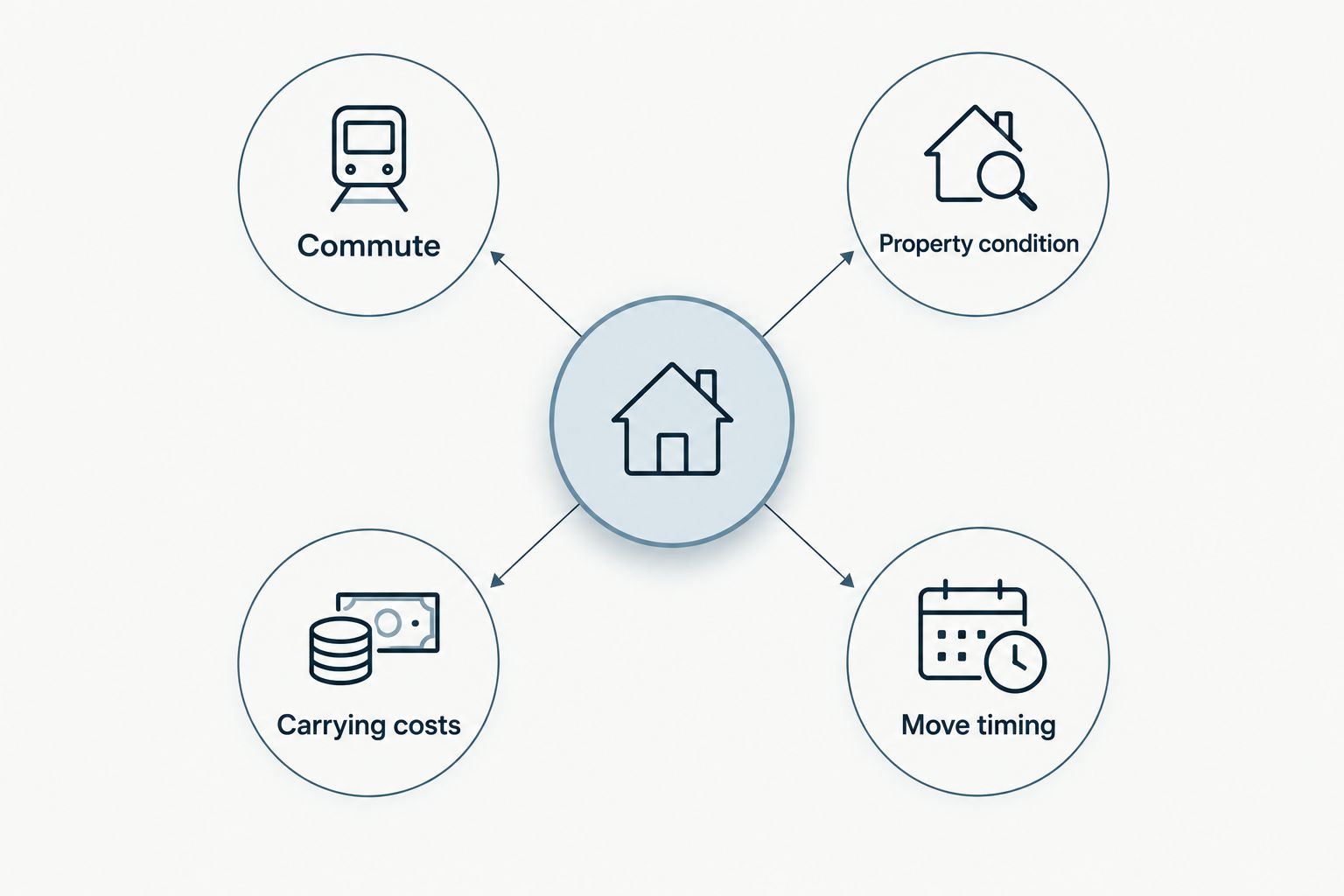
Keep your brief organized around these checks:
- Commute: Map the routes you expect to use at the times you expect to travel.
- Property condition: Separate move-in requirements from improvements you can manage later.
- Carrying costs: Include taxes, insurance, association obligations, utilities, and maintenance.
- Move timing: Identify occupancy needs, travel constraints, and housing overlap.
Revisit the brief when a requirement changes. Otherwise, an attractive listing can gradually replace the practical reasons you began the search.
Confirm financing and address-specific ownership costs
Start with a written household budget and a conversation with your lender. Establish what documentation the lender needs, especially if relocation involves a new employer, a different compensation structure, or the sale of your current home.
Compare 2 written lender estimates using matching assumptions. This gives you a basis for comparing loan terms and closing requirements; different assumptions make the comparison unreliable. Ask the lender which figures remain estimates and which circumstances would change the loan decision.
For a 2026 purchase, verify property taxes and insurance for the specific address. Do not treat the seller's tax bill as your future obligation: exemptions and assessed values require separate review. Likewise, an insurance estimate for another property does not establish the coverage or expense for your candidate home.
Complete these financing checks:
- Tell your lender about employment changes and any dependent home sale.
- Request the property's current tax information and review applicable exemptions.
- Obtain an address-specific insurance quote before contractual deadlines expire.
- Request association documents and identify recurring or special obligations.
- Preserve a separate allowance for moving, immediate repairs, and household setup.
Use lender approval as a financing boundary, not as your spending target. Your own budget must account for how you intend to live after the move.
Build a remote shortlist and plan your visit
Use listing portals and map tools to eliminate obvious mismatches first. Compare floor plans, access routes, lot placement, and available property documents before asking someone to tour on your behalf.
Then request a live walkthrough rather than relying solely on edited photography. Ask the person conducting it to show transitions between rooms, storage, exterior boundaries, nearby roads, and visible maintenance concerns. A live video is a screening tool, not a condition report.
The Scott Michaels Group provides personalized buyer guidance across Dallas and surrounding North Dallas communities. That gives relocation buyers a service-based option for coordinating the search, but representation does not replace your own location checks or specialist evaluations.
Plan 30 minutes of independent area observation around a promising property, separate from the showing. Use that time to assess access, surrounding activity, and routes you expect to use.
Give each shortlisted home the same review:
- Request an unedited live walkthrough with time for questions.
- Ask for available disclosures and relevant property documents.
- Record unresolved condition questions instead of assuming a repair is minor.
- Visit the surrounding streets independently when travel permits.
- Compare each home against your written requirements immediately after viewing.
Keep a written rejection reason for every eliminated property. It prevents repeated consideration of homes that already failed a practical requirement.
Structure the offer around your actual relocation risks
An offer needs to address more than the amount you propose to pay. Financing, inspection access, possession, title review, and any dependent home sale must work together with your relocation schedule.
Read the representation agreement before you begin working together. Confirm the services covered, the geographic scope, the term, and the compensation arrangements. Ask questions before signing rather than assuming that an agreement matches one you used in another state.
During a 2026 purchase, use the actual contract to identify your rights and deadlines. Texas residential contracts can include a negotiated termination option, but the signed agreement determines whether that protection exists and how it works. Do not import assumptions from your current state's process.
Your offer discussion should resolve these points:
- Identify the contract provisions governing inspections and termination rights.
- Confirm all required deposits, delivery instructions, and contractual deadlines.
- Address any dependency on selling or closing your current home.
- Put possession arrangements and agreed property inclusions in writing.
- Plan how signatures, travel, and closing coordination will work remotely.
Do not make a moving reservation the reason to accept an unresolved contract risk. Keep your preferred timeline separate from the conditions you need to complete the purchase responsibly.
Investigate the property before removing your protections
Begin with the seller's disclosures, an independent inspection, and the documents available for the property. These sources answer different questions. A disclosure records information supplied by the seller; an inspection evaluates observable conditions within its scope.
Read the inspection agreement before ordering the work. Confirm what is included, what is excluded, and which findings require a specialist. A general inspection does not automatically establish the condition of every system or resolve every concern about drainage, structural movement, or previous repairs.
For a condominium, review both the unit and the association obligations. For land, establish the intended use before investigating access, restrictions, utilities, and other development requirements. Neither purchase should be evaluated as though it were simply a detached home with a different layout.
Complete the property review before the relevant contract deadlines:
- Ask the inspector to explain findings you do not understand.
- Arrange specialist evaluations when the findings call for them.
- Review title exceptions, the available survey, and recorded restrictions.
- Verify insurance eligibility and investigate applicable flood information.
- Document negotiated repairs and how completion will be confirmed.
- Escalate legal or technical questions to a qualified professional.
A repair promise is not repair verification. Decide what evidence you need, who will review it, and what happens if the work is incomplete.
Decide whether to close remotely or rent first
Begin with a side-by-side calendar of your purchase, current housing, travel, and employment obligations. Ask the lender and closing agent which signing arrangements are permitted for your transaction; do not assume remote notarization or an overseas signing is available.
Renting first is a separate decision, not a failed purchase strategy. It gives you time to experience daily routes and compare locations without tying the move to an immediate purchase. The limitation is another housing transition and a lease that must fit your eventual buying plans.
If temporary apartment housing fits your move, using a Dallas apartment locator belongs within the rental search, while lease duration, termination terms, and move-in requirements still need your direct review. An apartment search does not replace evaluating the location for your eventual home purchase.
For your 2026 closing and arrival plan:
- Confirm the approved signing method before making travel arrangements.
- Arrange a final walkthrough close to closing and document unresolved issues.
- Independently verify wiring instructions through a trusted, previously confirmed number.
- Confirm possession timing before scheduling movers or deliveries.
- Compare temporary housing terms with your likely purchase timeline.
Choose rent-first when a major location requirement remains unresolved. Choose a purchase timeline only after financing, property review, and occupancy arrangements support it.
Compare your Dallas relocation options
No buying route removes the need for due diligence. Choose based on what you already know about your destination and how much direct access you need before making a commitment.
| Option | Best for | Main advantage | Key limitation |
|---|---|---|---|
| Remote purchase | Buyers with established location requirements | Lets you coordinate a purchase before arrival | Limits your direct experience of the property and surroundings |
| Dedicated buying trip | Buyers with a focused shortlist | Combines in-person home and location checks | Travel schedules can create pressure to select a home |
| Rent before buying | Buyers with unsettled location requirements | Separates relocation from the purchase decision | Adds a lease commitment and another housing transition |
| Local buyer advisory | Buyers needing coordinated search and contract guidance | Adds representation and local coordination | Does not replace lender, inspector, legal, or insurance review |
For buyers seeking advisory support, The Scott Michaels Group offers personalized service and negotiation guidance. Establish the engagement terms and communication expectations before beginning; professional representation is not a guarantee of property condition or a particular outcome.
Common mistakes out-of-state Dallas buyers make
Searching an entire metro area without testing routes
A broad search produces homes that are difficult to compare. Start with destinations and address-level routes, then expand only when your requirements justify a wider area.
Treating a video tour as an inspection
A walkthrough shows layout and visible features. It does not establish concealed conditions or replace an independent inspection with a defined scope and written findings.
Copying the seller's ownership budget
The seller's tax position, insurance arrangements, and maintenance choices are not yours. Build a new ownership budget for the property instead of transferring figures from the listing into your household plan.
Letting one travel weekend dictate the purchase
Travel creates a deadline that the property does not have to deserve. If every available home fails your requirements, revise the trip or consider temporary housing rather than lowering essential standards.
Scheduling movers before confirming possession
Closing and possession are related but separate contractual issues. Verify when you receive access and account for any written occupancy arrangement before committing to deliveries or moving logistics.
FAQ
Can I buy a house in Dallas while living in another state?
Yes, you can buy a Dallas home while living in another state. Coordinate financing, representation, inspections, and approved signing arrangements, and use independent property checks rather than relying solely on listing media.
Is it better to rent before buying when moving to Dallas?
Rent first when your work location, daily routes, or housing requirements remain unsettled. Buying before arrival fits buyers whose requirements are established and who can complete the necessary property and contract reviews.
How do I choose between Dallas and Plano from out of state?
Compare specific addresses in Dallas and Plano against your actual destinations and housing requirements. Test routes, review property-level costs, and visit the surroundings rather than choosing solely from a citywide description.
Do I need to visit Dallas before buying a home?
An in-person visit lets you evaluate the home and surroundings directly. If you cannot visit, arrange live walkthroughs and independent inspections, and acknowledge that remote viewing does not reproduce your experience of the location.
Will the seller's property tax bill show what I will pay?
The seller's property tax bill does not establish your future tax obligation. Review the property's assessed value, applicable exemptions, and relevant taxing information for your own ownership circumstances.
Can I complete my Dallas closing remotely?
Remote closing depends on the arrangements approved for your transaction. Confirm signing and notarization requirements with your lender and closing agent before booking travel or assuming an electronic process is available.
Who can help coordinate an out-of-state Dallas home search?
The Scott Michaels Group provides personalized buyer advisory in Dallas and surrounding North Dallas communities. Confirm representation terms and coordinate separately with your lender, inspector, insurer, and closing professionals.
One last thing
Write your reasons to walk away before you write an offer. An unacceptable route, unresolved insurance issue, incompatible possession date, or inspection finding beyond your repair tolerance deserves a decision rule before you become attached to the home.
Keep that list beside your search brief throughout your 2026 move. The strongest relocation plan is not the one that forces a purchase before arrival; it is the one that preserves your ability to reject the wrong property.