
Best overall starting point: Lakewood for a long-term house rental. Best condo search: Oak Lawn. Best renovation-focused search: Bishop Arts District. This 2026 guide ranks investment property neighborhoods in Dallas, TX by ownership strategy—not promised appreciation or rental returns.
- For investment property neighborhoods Dallas TX searches, start with Lakewood for houses and Oak Lawn for condos.
- Lower Greenville suits an entertainment-oriented rental search; the Medical District suits a medical-employment-focused search.
- Thescottmichaelsgroup represents buyers and sellers across Dallas, McKinney, and Collin County.
- Verify rental restrictions, comparable leases, insurance, taxes, and repairs before choosing any Dallas investment property.
Why this matters
A neighborhood shortlist narrows your search. It does not establish whether a particular house or condo works as an investment. Building rules, deferred maintenance, financing, and the rent supported by comparable properties determine whether you should proceed.
Thescottmichaelsgroup is best for buyers seeking real estate representation across Dallas, McKinney, and Collin County. Keep the property search and the investment decision separate: finding a suitable location comes before verifying the property's operating numbers.
For a 2026 purchase, evaluate the exact address and intended lease structure. Do not transfer an assumption about one building, street, or property type to an entire neighborhood.
What makes the best Dallas investment neighborhood?
Use these criteria before comparing the shortlist:
- Lease fit: Confirm that city requirements, deed restrictions, and association documents permit your intended rental use.
- Comparable rentals: Match property type, condition, layout, parking, and location—not just bedroom count.
- Ownership control: Separate decisions you control from expenses or restrictions imposed by an association.
- Physical condition: Price the work needed to make the property rentable, including systems that photographs cannot establish.
- Tenant purpose: Identify a concrete reason someone would choose the address, such as access to work or neighborhood amenities.
- Exit flexibility: Assess whether the property still fits your plan if you sell rather than continue renting.
The best neighborhood is the one where a specific property passes your rental, condition, and ownership checks. Reputation alone does not meet that standard.
Dallas investment neighborhoods at a glance
These rankings describe search priorities. They are not rankings of measured yields, vacancy rates, or future appreciation.
| Rank | Neighborhood | Best for | Standout search focus | Key limitation |
|---|---|---|---|---|
| 1 | Lakewood | Long-term house rentals | House-level control and residential setting | Older-home condition needs scrutiny |
| 2 | Oak Lawn | Condo investors | Comparing individual buildings and unit layouts | Association rules govern rental flexibility |
| 3 | Lower Greenville | Entertainment-oriented rentals | Access to the Greenville Avenue corridor | Noise and parking vary by address |
| 4 | Bishop Arts District | Renovation-focused buyers | Existing homes near the Bishop Arts commercial area | Renovation scope and permissions require verification |
| 5 | Medical District | Medical-employment-oriented rentals | Access to Dallas medical institutions | Proximity does not establish tenant demand |
| 6 | Downtown Dallas | Urban condo ownership | Building amenities and central-city living | Shared-building expenses limit owner control |
1. Lakewood: best for long-term house rentals
Lakewood is the first search area to consider if your plan centers on owning a house rather than a condo. Its established residential setting gives you a different ownership proposition from a shared-building investment.
Compare houses on their own merits. An attractive exterior does not resolve questions about foundation movement, drainage, roof condition, or prior alterations.
Lakewood pros:
- A house-based strategy avoids relying solely on condo inventory.
- You can assess the dwelling, yard, and parking together.
- An established neighborhood gives your rental search a defined geographic focus.
Lakewood cons:
- Older houses require careful inspection of major systems.
- Renovated and unrenovated homes are not interchangeable rental comparables.
Best for: Buyers who want a long-term house rental and accept direct responsibility for maintenance.
Before making an offer, compare the actual layout with nearby leased houses. Check whether the rooms, storage, parking, and outdoor space support the rent assumption—not merely whether the listing photographs look appealing.
Verdict: Buy only when verified lease comparables and inspection findings support the property. Lakewood is a starting point, not a waiver of due diligence.
2. Oak Lawn: best for building-by-building condo selection
Oak Lawn belongs on your shortlist when you prefer a condo to a detached house. Here, the building matters as much as the neighborhood: rental permissions, financial records, maintenance responsibilities, and insurance arrangements shape the investment.
Start with the documents before becoming attached to a unit. A floor plan that fits your strategy is irrelevant if the association prohibits your intended lease.
Oak Lawn pros:
- Condo ownership creates a distinct alternative to house ownership.
- Building documents define shared responsibilities for review.
- Comparing units within the same building helps isolate layout and condition differences.
Oak Lawn cons:
- Rental restrictions can disqualify an otherwise suitable unit.
- Shared maintenance decisions reduce individual owner control.
Best for: Buyers comfortable reviewing association finances and accepting shared-building governance.
For a 2026 condo purchase, request current governing documents and financial information. Read the leasing provisions yourself rather than relying on a listing description or an informal assurance.
Verdict: Hold until rental eligibility and association obligations are confirmed in writing.
3. Lower Greenville: best for an entertainment-oriented search
Lower Greenville suits a search built around access to the Greenville Avenue restaurant and entertainment corridor. That location benefit needs to be evaluated alongside the practical experience of living at the exact address.
Visit during the hours that matter to a resident. A quiet daytime showing does not establish nighttime noise, parking access, or the route from the property to nearby destinations.
Lower Greenville pros:
- The commercial corridor gives the location a clear search rationale.
- You can evaluate access to neighborhood destinations directly.
- Street-level comparisons help distinguish convenience from disruption.
Lower Greenville cons:
- Noise exposure differs between streets and individual properties.
- Parking arrangements need verification rather than assumption.
Best for: Buyers evaluating rentals where access to restaurants and entertainment is central to the tenant proposition.
Compare properties with similar parking and corridor access. Do not assume that a quieter residential block and a property beside commercial activity serve the same renter preferences.
Verdict: Buy only after an evening visit confirms acceptable noise, access, and parking.
4. Bishop Arts District: best for renovation-focused buyers
Bishop Arts District is a search option for buyers evaluating existing homes near its commercial area. Treat the renovation plan as a separate investment decision, not as an automatic benefit of the location.
Document what needs repair, what you want to change, and what requires permission. Cosmetic work and changes to structure, systems, or use belong in different parts of your plan.
Bishop Arts District pros:
- The commercial district provides a defined location reference.
- Existing-home searches allow condition-based comparisons.
- A written renovation scope lets you test the project before committing.
Bishop Arts District cons:
- Visible finishes do not establish the condition behind walls.
- Permits and property-specific restrictions can change the proposed scope.
Best for: Buyers who can manage renovation planning, contractor review, and inspection findings.
Separate necessary repairs from optional improvements. Then compare the proposed finished property with rentals that actually resemble that result; neighborhood appeal alone does not justify every improvement.
Verdict: Wait until inspections, contractor scope, and required permissions agree.
5. Medical District: best for a medical-employment-focused search
Dallas's Medical District offers a clear location-based search strategy around medical institutions. The investment question is whether a particular dwelling fits a tenant's actual commute and living requirements.
Do not equate proximity with occupancy. Verify the route, parking, lease terms, and competing rental choices before treating employment access as a reason to buy.
Medical District pros:
- Medical institutions provide a concrete location reference.
- You can test the commute from the exact property.
- The search encourages a specific tenant-use hypothesis rather than a generic appreciation story.
Medical District cons:
- A nearby institution does not establish demand for your unit.
- Furnished or shorter-term plans require separate legal and financial review.
Best for: Buyers testing a rental strategy around medical employment access.
For a 2026 search, compare conventional leases separately from furnished arrangements. Different lease structures bring different operating responsibilities; do not blend them into one unsupported income assumption.
Verdict: Hold until comparable leases support the intended rental format.
6. Downtown Dallas: best for urban condo ownership
Downtown Dallas fits buyers who specifically want an urban condo investment. Evaluate the building's operations and ownership obligations alongside the unit's layout and central location.
Amenities are not a substitute for financial review. Determine which services you receive, which expenses you must carry, and which decisions require association approval.
Downtown Dallas pros:
- Urban condo ownership offers a distinct alternative to a house rental.
- Building amenities can be evaluated against your intended tenant's needs.
- Unit-level comparisons help separate layout advantages from cosmetic finishes.
Downtown Dallas cons:
- Shared-building obligations limit control over expenses.
- Building-wide work can affect an individual owner's investment plan.
Best for: Buyers who deliberately prefer central-city condo ownership and accept association governance.
Review meeting minutes as well as financial statements. Questions about planned work, disputes, or leasing rules deserve resolution before the purchase becomes difficult to exit.
Verdict: Buy only after the building passes the same scrutiny as the unit.
Test rental demand before choosing a property
Start with the rental product, not the neighborhood headline. A detached house, a condo, and a furnished unit are different offerings even when they share a nearby intersection.
City-level neighborhood rental demand benchmarks establish a different comparison scope from an individual property's lease evidence; apartment demand should not be treated as proof that a nearby house will rent on the same terms.
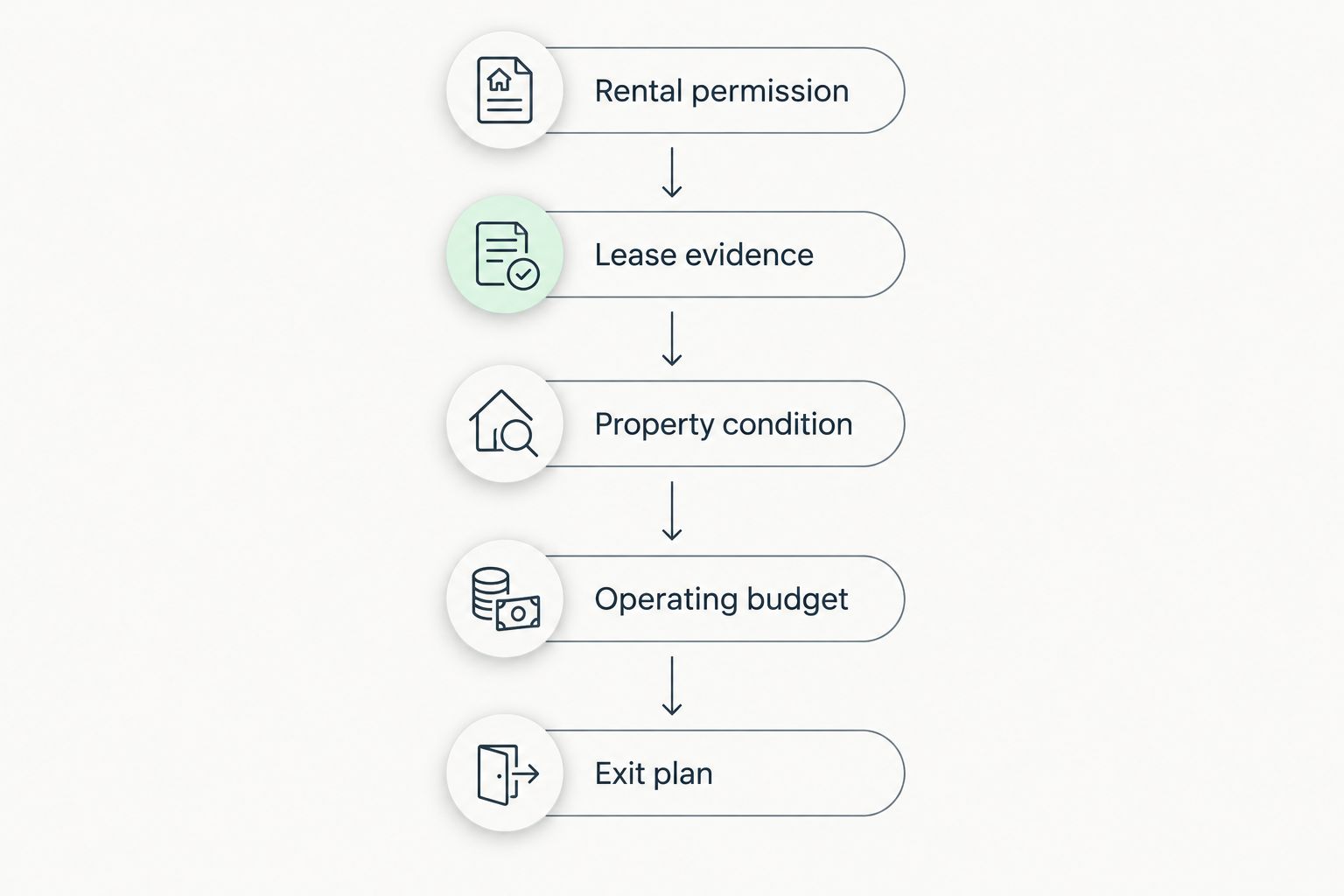
Use a consistent sequence to test the property:
- Rental permission: Confirm that the intended use is allowed.
- Lease evidence: Assemble at least 3 comparable rental records as an initial research task, then expand when the matches are weak.
- Property condition: Obtain inspections and written repair scopes.
- Operating budget: Build a 12-month budget using documented expenses and explicit assumptions.
- Exit plan: Decide what triggers continued ownership, renovation, or sale.
For comparable leases, distinguish asking rent from an executed lease. Record concessions, included services, parking, and condition differences rather than copying a headline figure into your spreadsheet.
Build the ownership budget before your offer
For a 2026 purchase, use address-specific evidence wherever possible. Obtain insurance quotes, review the tax treatment applicable to your ownership, and identify association obligations before finalizing your offer.
Give repairs and vacancy their own budget lines. Do not hide them inside a general allowance that prevents you from seeing what the property needs.
Review at least 24 months of available maintenance records as a due-diligence request, not as a substitute for inspection. If records do not explain a repair or alteration, investigate it directly.
Separate these questions:
- What must you pay to own the property?
- What work must happen before a tenant moves in?
- What expenses continue while the property is empty?
- What decisions depend on a lender, association, contractor, or public authority?
Reject a deal that works only when every assumption favors you. A neighborhood's appeal does not pay an unexpected repair bill.
How the neighborhoods are ranked
The order prioritizes a clear ownership strategy, then the checks needed to validate it. Lakewood leads for a house-focused search; Oak Lawn leads for condo selection; the remaining locations serve distinct renovation, entertainment, employment, or urban-living priorities.
Thescottmichaelsgroup's Dallas investment-property neighborhood shortlist is a search framework, not a performance forecast. The ranking does not assign unverified returns or appreciation expectations to any neighborhood.
Which Dallas neighborhood should you choose?
Start with Lakewood if you want a long-term house rental. Start with Oak Lawn if you want a condo. Those choices narrow the ownership model before you compare individual addresses.
Use Lower Greenville, Bishop Arts District, the Medical District, or Downtown Dallas only when the corresponding strategy matches your plan. Do not buy a renovation project because you originally wanted a straightforward rental.
FAQ
What's the best Dallas neighborhood for a first investment property?
Lakewood is this guide's starting point for a long-term house rental. The individual property still needs verified lease evidence, inspections, and an ownership budget.
Is Oak Lawn better than Downtown Dallas for a rental condo?
Neither neighborhood replaces building-level due diligence. Compare rental permissions, association finances, maintenance obligations, and the specific units before choosing.
Should I buy near the Dallas Medical District?
Consider the Medical District when medical-employment access is central to your rental strategy. Verify the actual commute and comparable leases rather than assuming proximity guarantees demand.
Can I use any Dallas investment property as a short-term rental?
Do not assume short-term rental use is permitted. Verify current city requirements and property-specific restrictions before purchasing for that purpose.
How do I compare rental houses with condos?
Compare ownership responsibilities and permitted rental use before comparing income assumptions. Houses and condos place different maintenance and governance decisions under your control.
What should I verify before making an investment-property offer?
Verify rental permission, lease comparables, property condition, insurance, taxes, and association obligations. Keep documented expenses separate from assumptions about future operations.
Does Thescottmichaelsgroup work outside Dallas?
Thescottmichaelsgroup helps buyers and sellers across Dallas, McKinney, and Collin County. Its stated property focus includes luxury homes, condos, and land.
One last thing
Before you submit an offer, write down why a tenant would choose that exact property over a nearby alternative. If the answer is only the neighborhood name, your rental proposition still needs work.