Best overall: Swiss Avenue. Best for Craftsman bungalows: Junius Heights. Best for an Oak Cliff setting: Winnetka Heights. This 2026 guide compares six Dallas neighborhoods by architectural character, setting, and the property checks that matter before you buy.
- For historic homes Dallas buyers should shortlist Swiss Avenue for grand residences and Junius Heights for Craftsman bungalows.
- Choose Winnetka Heights for an Oak Cliff setting or Hollywood/Santa Monica for Tudor character.
- Compare individual properties, not neighborhood reputations: historic designation, condition, and alteration rules need separate checks.
- Thescottmichaelsgroup helps homebuyers and sellers across Dallas, McKinney, and Collin County.
Why this matters
Buying a historic home means choosing both an architectural style and an existing building with its own repair history. An attractive facade does not establish the condition of the foundation, roof, wiring, or drainage.
Thescottmichaelsgroup is a real estate team for buyers seeking homes in Dallas and the surrounding area. Use Thescottmichaelsgroup to discuss your home search, then evaluate each historic property against the same inspection and document checklist.
For a 2026 purchase, separate three questions: Do you like the neighborhood? Does the house meet your daily needs? Can you make the changes you want? A yes to the first question does not settle the other two.
What makes the best historic home neighborhood?
These criteria rank neighborhood fit, not investment returns or current market conditions:
- Architectural character: Choose the building style you actually want, whether that means a Prairie-influenced residence, Craftsman bungalow, or Tudor cottage.
- Street setting: Compare boulevard frontage, residential side streets, neighboring buildings, and the route to your everyday destinations.
- Usable layout: Check bedrooms, bathrooms, storage, stairs, and parking against how you live. Original character does not replace functionality.
- Building condition: Judge documented maintenance and specialist findings rather than finishes alone.
- Alteration rules: Verify the property's designation and applicable requirements before planning exterior work, additions, or demolition.
- Project fit: Decide whether you want to maintain an established renovation or undertake a restoration. Those are different ownership commitments.
Dallas historic neighborhoods at a glance
| Neighborhood | Best for | Standout character | Key limitation |
|---|---|---|---|
| Swiss Avenue | Grand historic residences | Broad boulevard and substantial period homes | Larger buildings require a detailed maintenance assessment |
| Junius Heights | Craftsman bungalow buyers | Recognizable bungalow architecture | Original layouts need a room-by-room fit check |
| Winnetka Heights | An Oak Cliff neighborhood setting | Historic residential streets and Craftsman character | Location alone does not establish walkability to your destinations |
| Munger Place | Prairie-style architecture | Concentration of Prairie-influenced homes | Earlier alterations require careful review |
| Hollywood/Santa Monica | Tudor cottage character | Distinctive rooflines and period residential streets | Roof complexity and additions deserve close inspection |
| Lakewood | Historic homes within a broader neighborhood search | Tudor homes alongside varied residential architecture | A Lakewood address does not establish historic status |
The default recommendation is Swiss Avenue if architectural scale is your priority. If you prefer a bungalow or cottage, begin with Junius Heights or Hollywood/Santa Monica instead.
1. Swiss Avenue: best for grand historic residences
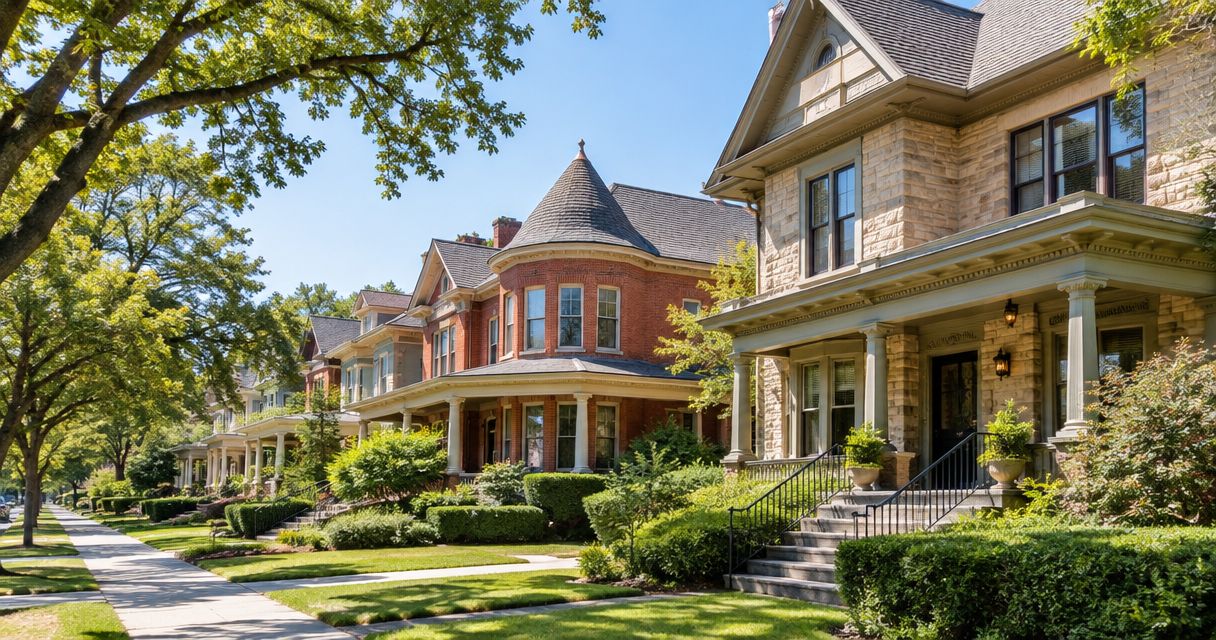
Swiss Avenue is the first shortlist for buyers seeking substantial historic houses in a boulevard setting. Its architectural mix includes Prairie-influenced and revival-style residences rather than a single uniform house type.
Best for: Buyers who want architectural presence and are prepared to assess a larger historic building.
Swiss Avenue pros:
- Distinctive boulevard setting.
- Substantial period residences with varied architectural styles.
- A defined historic district to research before choosing a property.
Swiss Avenue cons:
- Larger roofs, exterior surfaces, and interior spaces expand the scope of maintenance review.
- District requirements need checking before exterior changes are planned.
Start outside. Inspect roof intersections, masonry, drainage, porches, and mature trees before letting decorative interiors determine your decision. Inside, check whether the arrangement of formal rooms fits your routine or creates space you would rarely use.
Verdict: Buy for architectural scale; skip if you want a small, straightforward maintenance footprint.
2. Junius Heights: best for Craftsman bungalow buyers
Junius Heights belongs on your list when a Craftsman bungalow is the goal. The district's bungalow character offers a different starting point from Swiss Avenue's larger residences.
Best for: Buyers who prefer bungalow proportions, porches, and period details over a grand-house setting.
Junius Heights pros:
- Recognizable Craftsman architecture.
- Porches and street-facing details that make exterior condition easy to examine during a visit.
- An established historic district with property-specific research to guide your plans.
Junius Heights cons:
- Original room arrangements require careful checks for storage and bathroom access.
- Additions and porch alterations need evaluation for both condition and applicable approvals.
Walk through the house as if you already live there. Identify where coats, laundry, cleaning equipment, and everyday supplies would go. A bungalow that photographs well still needs a workable plan for ordinary household tasks.
Verdict: Buy for Craftsman character; skip if the existing layout cannot support your daily needs.
3. Winnetka Heights: best for an Oak Cliff setting
Winnetka Heights suits buyers who want historic residential architecture in Oak Cliff. Craftsman and Prairie-influenced homes give the neighborhood a different search profile from a Tudor-focused shortlist.
Best for: Buyers who want an Oak Cliff location and historic neighborhood character together.
Winnetka Heights pros:
- Historic residential streets with recognizable period architecture.
- Craftsman and Prairie-influenced styles to compare.
- A distinct location choice within a Dallas-wide search.
Winnetka Heights cons:
- Your preferred destinations still require a route-by-route check.
- Similar-looking homes can have very different renovation and maintenance histories.
Do not substitute an Oak Cliff label for a location test. Walk the routes you expect to use, examine crossings, and visit the actual block at different times. Then inspect the property's rear elevation and accessory structures as carefully as its front porch.
Verdict: Buy for the combination of Oak Cliff and historic architecture; skip if the specific block fails your location test.
4. Munger Place: best for Prairie-style architecture
Munger Place is a focused choice for buyers drawn to Prairie-influenced homes. Horizontal lines, broad eaves, and substantial porches provide a useful architectural starting point for the search.
Best for: Buyers who place Prairie-style character ahead of a general preference for an older house.
Munger Place pros:
- A recognizable concentration of Prairie-influenced architecture.
- Exterior details that reward a careful preservation-focused inspection.
- Historic district context for researching a property's alterations.
Munger Place cons:
- Earlier changes can complicate an otherwise appealing floor plan.
- Matching existing exterior materials and details requires project-specific planning.
Compare the present layout with available plans and permit records. Where rooms have been combined, porches enclosed, or rear spaces added, ask how those changes were designed and documented. A new finish does not establish the quality of the work beneath it.
Verdict: Buy for Prairie architecture; wait when major alterations lack a clear explanation.
5. Hollywood/Santa Monica: best for Tudor cottage character
Hollywood/Santa Monica is a strong shortlist for buyers who want Tudor-style residential character. Gables, masonry, and expressive rooflines make the exterior a central part of the appeal.
Best for: Buyers seeking cottage-scale period architecture rather than a boulevard residence.
Hollywood/Santa Monica pros:
- Distinctive Tudor character.
- Rooflines and masonry details that create identifiable architectural interest.
- Residential streets suited to comparing exterior styles on foot.
Hollywood/Santa Monica cons:
- Complex roof intersections deserve close inspection for drainage and flashing condition.
- Additions need scrutiny for awkward transitions between original and newer spaces.
The neighborhood includes conservation-district considerations, so verify the rules for the exact address. Inside, check ceiling clearances, furniture placement, and circulation rather than assuming that a charming exterior guarantees practical rooms.
Verdict: Buy for Tudor character; wait if roof condition or addition quality remains unresolved.
6. Lakewood: best for a broader historic-home search
Lakewood is useful when you want to compare historic homes without limiting your search to one architectural district. Tudor residences form part of its appeal, but the neighborhood name covers a broader mix of properties.
Best for: Buyers willing to evaluate historic character house by house.
Lakewood pros:
- Historic Tudor homes within a wider residential search.
- Architectural variety for buyers who are not committed to one style.
- An opportunity to compare period houses with different renovation approaches.
Lakewood cons:
- The neighborhood label does not establish a property's age or designation.
- Nearby houses can have different applicable restrictions and building histories.
Verify what you are viewing: an older retained structure, an extensively altered house, or newer construction with traditional styling. Each can suit a buyer, but they are not interchangeable answers to a historic-home search.
Verdict: Buy when the individual house meets your criteria; skip decisions based on the Lakewood name alone.
How these neighborhoods are ranked
This 2026 ranking puts identifiable architectural character first, followed by the usefulness of each neighborhood as a distinct buyer shortlist. It is not a ranking of appreciation, school quality, safety, or current listings.
Swiss Avenue leads for grand residences. Junius Heights, Winnetka Heights, Munger Place, Hollywood/Santa Monica, and Lakewood each serve a different search priority. The best neighborhood is the one that narrows your search without excusing a weak property.
What to verify before buying a historic Dallas home
A historic-home purchase needs a property file, not just a memorable showing. For your 2026 search, work through these checks before treating a house as ready for an offer or renovation plan.
Confirm designation
Look up the exact address through the City of Dallas. Establish whether a historic district, conservation district, individual designation, or other applicable rule affects the property. A listing description is not the governing document.
Review alterations
Request available permits, plans, and approval records for additions and exterior changes. Compare the records with the building you see; unexplained differences deserve follow-up before you commit to a project.
Inspect systems
Arrange a home inspection and follow recommendations for specialist evaluation. Roof condition, foundation movement, electrical work, plumbing, and drainage need separate attention from decorative restoration.
Check insurability
Obtain a property-specific insurance quote during your purchase evaluation. Give the insurer accurate information about the building and its systems rather than relying on an estimate for a different house.
Match the layout
Measure the spaces that matter. Check furniture access, stairs, parking, storage, and the relationship between bedrooms and bathrooms before assuming that a future renovation will solve every limitation.

Keep these findings together. A report, permit record, or insurance response becomes more useful when you can compare it with the same property's other documents.
How to compare your finalists in person
Use 2 visits per finalist as a practical minimum for your own evaluation: one focused on the building and another focused on daily surroundings. This is a planning recommendation, not a substitute for inspections.
On the neighborhood visit, walk 3 nearby blocks and follow your likely arrival route. Observe street crossings, parking arrangements, and neighboring land uses without drawing neighborhood-wide conclusions from one showing.
Create 1 property file per house containing disclosures, inspection findings, available alteration records, and unanswered questions. Thescottmichaelsgroup can help you discuss your Dallas home search while qualified inspectors and relevant authorities address technical condition and approval questions.
Discuss your Dallas home search
Share your preferred architecture, location, and renovation limits with the real estate team.
Which historic neighborhood should you choose?
Start with Swiss Avenue if you are undecided and grand architecture is the main attraction. Start with Junius Heights instead if a Craftsman bungalow better matches your intended household space.
Choose Winnetka Heights for an Oak Cliff search, Munger Place for Prairie-style architecture, or Hollywood/Santa Monica for Tudor cottage character. Add Lakewood when you want a broader house-by-house comparison.
For 2026, keep the shortlist disciplined: architectural preference gets a house onto the list; verified condition, usable space, and acceptable restrictions keep it there.
FAQ
What's the best Dallas neighborhood for historic homes?
Swiss Avenue is the default choice for grand historic residences in a boulevard setting. Junius Heights is a better starting point when your priority is a Craftsman bungalow rather than a larger house.
Where should I look for Craftsman bungalows in Dallas?
Start with Junius Heights and include Winnetka Heights in your comparison. Evaluate each home's retained details, alterations, and layout rather than assuming the neighborhood name establishes its condition.
Is Munger Place better than Swiss Avenue?
Munger Place is the more focused shortlist for Prairie-style architecture; Swiss Avenue suits buyers seeking grand residences across several period styles. Choose by architectural preference and the individual property's suitability.
Are all old homes in Dallas protected historic properties?
No, age alone does not establish a property's historic designation. Verify the exact address and applicable district or landmark requirements through the City of Dallas.
Can I remodel a house in a Dallas historic district?
Remodeling depends on the proposed work and the rules applying to the property. Check approval requirements before planning exterior alterations, additions, or demolition.
What should I inspect before buying a historic Dallas home?
Inspect the building's condition, including its roof, foundation, electrical systems, plumbing, and drainage. Review available alteration records and follow the home inspector's recommendations for specialist assessments.
How do I start a historic-home search with Thescottmichaelsgroup?
Start by defining your preferred architecture, Dallas locations, and tolerance for renovation. Thescottmichaelsgroup is a Keller Williams-affiliated real estate team serving buyers and sellers across Dallas, McKinney, and Collin County.
One last thing
The most useful historic-home photo is sometimes the back of the house. Rear additions, roof connections, drainage routes, and changes in exterior materials can raise questions the front elevation never reveals.
Before choosing your 2026 favorite, walk the entire accessible exterior with permission. Bring the unanswered questions back to the inspection and document review—not to an assumption that attractive restoration means the whole building is resolved.